Search

Observer Communicators: keeping northern flights safe

If you’ve ever wondered who helps keep the planes flying in and out of northern communities safe, the answer is closer than you might think.

Observer Communicators – specialists who convey critical weather information, runway conditions and other essential information to pilots – help ensure that flights land and depart safely at small airports across Canada’s far North.
Based at Thebacha Campus in Fort Smith, the Observer Communicator program prepares graduates to serve a vital role at Community Aerodrome Radio Stations (CARS) in the Northwest Territories, Yukon, Nunavut and Northern Quebec. Aurora College is the only institution in Canada that offers this specialized training.

The NAV CANADA training is an intensive 10-week program that blends classroom instruction with hands-on training in radio communications and aviation weather observing. In simulated radio rooms, students practice their skills in real-world scenarios that can range from managing aircraft and ground vehicles to coordinating emergency responses.

Participants in program are normally chosen by ATS Services, the main employer of Observer Communicators, rather than applying directly to Aurora College. Most graduates go directly into jobs with ATS Services or territorial aviation agencies in small Northern communities. Senior instructor George Skippings notes that ideal candidates are residents of these communities, and that the program is designed to build northern capacity.

Aurora College runs four intakes per year—in January, April, July, and October. Students hail from across the territories and beyond, ranging from young adults to people seeking a new career. While the program requires a minimum of Grade 10 education, the most successful participants are curious about aviation, detail-oriented, and possess strong communication and literacy skills.

To learn more, check out Observer/Communicator – Aurora College or ATS Services.

High school students “TAP” into skilled trades

For several years, the Canada-wide shortage of skilled tradespeople has been growing, and is sharply felt in the NWT – especially in the smaller communities. According to Employment and Social Development Canada, nearly one in five of the four million Canadians who currently work in trades is poised to retire by 2030, while the number of young people entering the trades continues to decline. Exposing young people to the trades and helping them consider trades as a viable career option are crucial to helping reverse this trend.
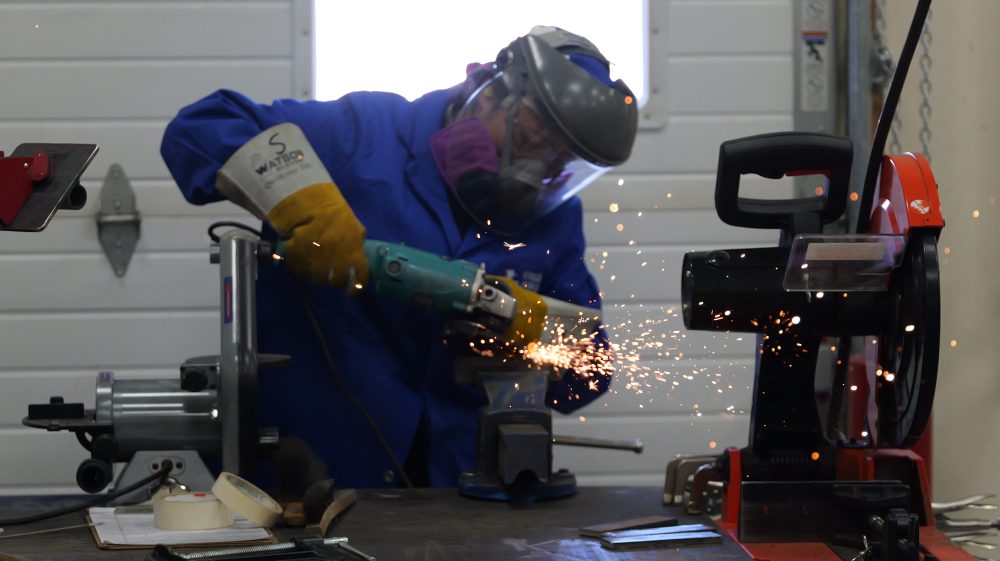
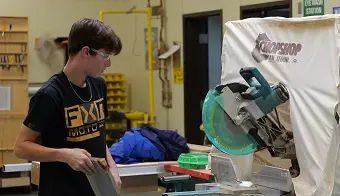
Since 2005, Aurora College has delivered the week-long Trades Awareness Program (TAP) sessions to high school students in the South Slave. In recent years, TAP has expanded to include students from schools in the Tlicho, Dehcho, Sahtu and Beaufort Delta regions, as well as a summer camp option. The aim of TAP is to give students from small high schools access to a variety of trades that they can try out and explore in a safe, fun, educational environment, and perhaps consider a career in trades.
Students first participate in the one-week Introductory TAP, in which they spend one day in each of four trades, attend workshops about career and post-secondary planning and opportunities, experience “College life”, meet students from other communities and participate in recreational activities. They can then return for up to two week-long Intensive TAP sessions, where they focus on one trade for four days. Trades offered have included Carpentry, Electrical, Cooking, Mechanical, Plumbing, Welding, and Hairdressing, among others.
Each delivery is a partnership between Aurora College, regional school divisions, the department of Education, Culture and Employment, local business, and can include Indigenous governments, corporate sponsors and other GNWT departments. Since 2005, nearly 2,000 students have participated in the Trades Awareness Program, and several have gone on to become Journeypersons or work in a skilled trade.
School divisions interested in more information can email TAIT.Training@auroracollege.ca.

Driving success: Big rigs, haul trucks and heavy equipment

At the Centre for Mine and Industry Training, students in Heavy Equipment Operator, Class 1 and Class 3 Driver training, and mining programs practice operating big rigs, haul trucks and various pieces of heavy equipment on state-of-the-art simulators. The simulators integrate cutting-edge technology with operational situations, providing a real-world sensory experience, including replicating vibrations and machine behaviour, such as weight shifting. Students practice on a variety of scenarios that mimic real-world job sites, and then receive a detailed evaluation of their session to ensure continuous improvement.
Heavy Equipment Operator training was the first course offered in Fort Smith in 1968, and remains one of the most popular. The full 15-week program at Thebacha Campus provides up to 185 hours of hands-on training on two pieces of equipment, as well as classroom work that covers preventative maintenance procedures, first aid and safety certifications and general knowledge. Shorter courses are often offered off-site in partnership with communities and Indigenous governments.
Aurora College was the first training provider in the NWT to offer the new, mandatory Class 1 Driver Entry Level Training (ELT) The five-week program runs up to eight times throughout the year. The training prepares students to take the written and practical Class 1 Drivers testing. Class 3 Driver Training is also offered at Thebacha Campus. Through a new reciprocal agreement with Alberta, residents of that province with Alberta Class 5 licences who successfully complete the Aurora College Class 1 ELT training can test for their Alberta Class 1 licence.
In partnership with Indigenous governments, communities and industry, Aurora College offers several mine training programs. The five-week Introduction to the Mining Industry can be delivered off-site or at Thebacha Campus, and is the prerequisite for both Underground Miner and Surface Miner programs.
More information about Industrial Training programs can be found on our website or email TAIT.Training@auroracollege.ca.

Seven new programs to support NWT trades

Skilled tradespeople are essential for the vibrancy of NWT communities. To help meet the growing need for northern-based tradespeople, Aurora College is adding seven new trades and apprenticeship programs to an already robust roster.

Three new Fundamentals programs – Pipe Trades, Mechanics and Welding – will deliver a combination of hands-on and academic coursework to prepare individuals for Level 1 apprenticeship exams and provide students with valuable skills to help them enter the trades. The College recently introduced Fundamentals of Carpentry and Fundamentals of Electrical as well.

Apprenticeship options will be expanded, with the addition of Automotive Service Technician Levels 1 & 2, Plumbing Level 3, and Heavy Equipment Technician Level 3 (Off Road). Current Carpentry, Plumbing and Electrician apprenticeship programs will be upgraded with new tools and technology.

Funding for the new programs and equipment is through a $625,018 grant from the Canadian Apprenticeship Strategy’s Union Training and Innovation Program (UTIP) – Investments in Training Equipment Stream. UTIP is part of the Canadian Apprenticeship Strategy’s response to the skilled trades workforce’s most pressing needs, including addressing barriers to successfully entering skilled trades, addressing the housing crisis, and increasing net-zero construction to help fuel economic growth. This investment by the Government of Canada will help Aurora College ensure trainees have access to the most up-to-date technology so they can meet and exceed industry standards and is part of Aurora College’s commitment to enhancing and expanding trades training opportunities in the North.

Quality, skills-based training to meet Northern needs

Before experiencing it for themselves, many people don’t realize the gem that is Aurora College’s School of Trades, Apprenticeship and Industrial Training (TAIT). The facilities, training equipment, range of programming, curriculum and quality of instructors rival what is available at larger institutions while offering lower student-instructor ratios and more one-on-one attention from instructors.

Based at Thebacha Campus in Fort Smith, TAIT delivers unique, northern-focused, high-quality skills-based training that is developed and delivered with the northern learner and northern labour market in mind.
Spacious, modern, well-equipped shop facilities and classrooms for apprenticeship and trades programs fill the entire west wing of the main campus. A short walk away is the Centre for Mine and Industry Training which was built specifically to deliver mining, heavy equipment and Class 1/Class 3 driver training. Hands-on training with heavy equipment, large haul trucks and other mining equipment takes place at private practice sites near Fort Smith.

Each program has a rigorous curriculum designed to prepare students for success, with ongoing efforts to meet the North’s growing demand for skilled workers and to provide students with best possible training and career opportunities. The curriculum for apprenticeship technical training at Aurora College is recognized by Alberta, Yukon and Nunavut, in addition to the NWT.
Program offerings are chosen to respond to needs of communities, employers, and students. In addition to traditional apprenticeship and trades deliveries, the College has developed, adopted or adapted a number of unique options, including Observer Communicator, Non-apprenticeship Housing Maintainer and a stand-alone Oil Heat Systems Technician program.

As a northern institution, Aurora College is proud of the fact that the majority of TAIT instructors are long-time northerners – many of whom are Indigenous, and many received trades education at the College. As well, most TAIT instructors have extensive work experience within the NWT and in the north, so are able to share that experience and understanding with their students.

Partnerships with Northern businesses, industry, and industry organizations are key to helping ensure curriculum and training are aligned with the needs of Northern labour market. Aurora College is grateful for the support of these partners, including De Beers Group, Diavik Diamond Mine, and Ekati.

STEM Outreach program brings hands-on, fun learning to NWT students

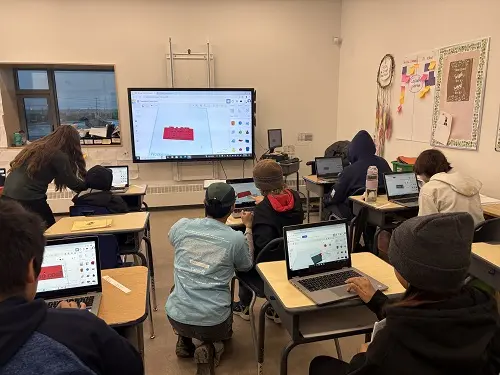
October is Cyber Safety Awareness month, promoting ways Canadians can stay safe online. Aurora College’s STEM Outreach Program is offering a series of interactive classroom activities to help students in Grades 1–7 learn about online safety, encryption, and digital citizenship in fun and age-appropriate ways.

The STEM Outreach Program is dedicated to inspiring and empowering youth across the Northwest Territories through engaging, hands-on science, technology, engineering, and mathematics (STEM) education. Over the past eight years, the Outreach team has provided high-quality STEM programming to approximately 8,000 JK–Grade 12 students each year, with a strong focus on reaching remote and underserved NWT communities.

Led by a team of three full-time staff and additional part-time educators based in Inuvik, Yellowknife, and Fort Smith, the program strives to remove some of the financial and regional barriers to STEM education by providing all STEM programming for free. Through in-class visits, after-school programs, and remote activities, the STEM Outreach program ensures that all youth across the NWT have access to meaningful STEM experiences.

Innovative initiatives such as the award-winning “Train the Teacher, Loan the Gear” program equip educators with the tools and confidence to integrate STEM into their classrooms. The Outreach Team also hosts events such as Community Science Nights, Science Rendezvous, and Geoweek, as well as providing resources for summer camps, libraries, and youth centres.

Educators and community groups: Reach out to the STEM Outreach team at: outreach@nwtresearch.com .

Junior Achievement workshops added to recent Trades Awareness Programs

In September, Aurora College’s Trades Awareness Program (TAP) partnered with Junior Achievement Canada (JA) and Colleges and Institutes Canada (CICan) to offer an expanded Youth Symposium to high school students from the South Slave, Dehcho and Tłı̨chǫ regions.

The two week-long Introductory Trades Awareness Programs were hosted at Thebacha Campus in Fort Smith. Along with the opportunity to try out four different trades, students participated in Junior Achievement’s “Be Entrepreneurial” program, budgeting and personal finance sessions, workshops to help plan for post-secondary education, and a variety of evening recreational activities. Nearly 100 students took part over the two weeks. Students could choose between carpentry, cooking, electrical, hair dressing, pipe trades and welding. After completing the Introductory TAP, students are eligible to attend the week-long Intensive program, in which they spend four days exploring a trade.

Since 2005, Aurora College has partnered with the South Slave Divisional Education Council and Education (ECE), Culture and Employment to offer TAP to South Slave students. During the past several years, partnerships with other regional school divisions and funders has allowed students from Dehcho, Tłı̨chǫ, Beaufort Delta and Sahtu regions to participate as well.

TAP was set up to introduce high school students from smaller communities to the trades as a potential career choice. Since 2005, more than 2,000 NWT students have participated, some of whom have gone on to become apprentices and journeypersons.

Aurora College will be hosting additional Trades Awareness sessions in the 2025-2026 academic year. Interested schools or school divisions can contact TAIT.Training@auroracollege.ca for more information.

Truth and Reconciliation at Aurora College

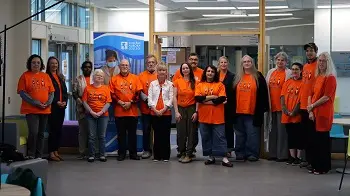
In recognition of the National Day for Truth and Reconciliation on September 30, Aurora College held a number of events for students, staff and community members in Fort Smith, Yellowknife and Inuvik. The events were held to honour the strength and resiliency of Indigenous communities while acknowledging the painful truths of our nation and our shared path forward.

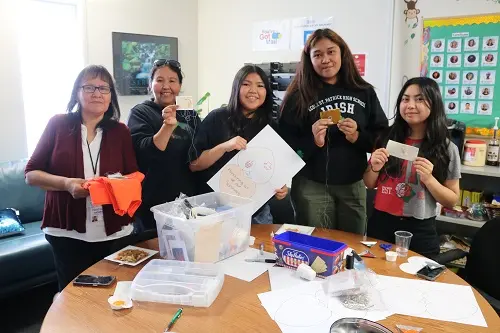
Thebacha Campus’s Truth and Reconciliation Week ran from Sept. 23 to 29 and was led by the Culture Committee, which plays an active role in honouring Indigenous culture year-round. Events included a Feeding of the Fire ceremony, daily virtual sessions from the National Centre for Truth and Reconciliation, bannock and bead-making workshops, a drymeat-making demonstration, Indigenous games demonstrations, and a pow wow dancing demonstration. Most of the events were led by local Elders.

In Inuvik, Inuvialuit Regional Corporation (IRC) health support worker and residential school survivor, Jeffrey Amos, shared his personal experiences with Aurora Campus students, faculty and staff. He spoke to the lasting impacts of the residential school system and the ongoing process of healing and resilience, underscoring the importance of sharing stories and acknowledging the history that continues to shape Northern Indigenous communities. Students and staff then shared a traditional lunch with roasted caribou, soup and whitefish.

Yellowknife North Slave Campus marked the week with a variety of events. The Early Learning and Child Care program hosted a “Soup and Sew”, while at the main campus, students and staff participated in a “Mindful Monday” lunch and a “Heart Garden” activity, crafting healtfelt messages of support and hope to share.

As a post-secondary institution in the Northwest Territories, Aurora College commits to ensuring the Indigenous ways of knowing, being, doing, and believing remain grounding principles of our educational influence, and honour the opportunity to live and learn on the Homeland of the Dene, Métis, Inuvialuit, and NWT Cree.

Our culture will remain true to the tenet that education is the key to true Reconciliation, and traditional knowledge shared by Indigenous communities helps lay the path forward toward a more equitable future for all.

Check out all of the photos of our Truth and Reconciliation Day activities!

Aurora College receives $1.4 million toward climate and environmental literacy

August 21, 2025

Aurora College receives $1.4 million toward climate and environmental literacy

FORT SMITH, NT – Aurora College has received $1.46 million from the Government of Canada for its Building Climate Change Awareness and Environmental Literacy in NWT Youth Project, which aims to raise climate change awareness among elementary and secondary school students and their educators. The funding comes from the Climate Action and Awareness Fund, part of the Government of Canada’s Environmental Damages Fund.

The funding will provide the College with the opportunity to facilitate a wide range of locally and culturally relevant opportunities for students from Kindergarten to Grade 12 to learn about climate change and its impact on the Northwest Territories.

In July, the Honourable Julie Dabrusin, Minister of Environment and Climate Change, announced that the Government of Canada is investing over $14.4 million from the Environmental Damages Fund’s Climate Action and Awareness Fund to support 17 environmental literacy projects across Canada. These projects will develop the tools and skills young Canadians need as they work toward solutions to fight climate change. Aurora College is among the 17 recipients of this funding.

Through the Building Climate Change Awareness and Environmental Literacy in NWT Youth Project, Aurora College will develop and deliver age-appropriate, participatory, and place-based programming about climate change in the NWT, where the climate is changing at rapid rates up to four times faster than the global average.

The project will entail hands-on climate change educational programming in partnership with educators and community organizations through the Aurora Research Institute’s STEM Outreach team. The Building Climate Change Awareness and Environmental Literacy in NWT Youth Project will run through 2029.

Quote:

“Similar to literacy and numeracy, environmental literacy is an understanding and skill level to talk about what makes up our environment, how systems interact and work, and how having this language expands the ability of youth to engage in conversations about the environment. By building this capacity in NWT youth, we are empowering them to be stewards of the land and advocate for the place they call home, where the impacts of climate change are being felt at a faster rate than the global average.”

– Chris Paci, Vice-President of Research, Aurora Research Institute

Links:


21 août 2025

Le Collège Aurora reçoit 1,4 million de dollars pour la sensibilisation aux enjeux climatiques et environnementaux

Fort Smith, TNO – Le Collège Aurora a reçu 1,46 million de dollars du gouvernement du Canada pour son projet de sensibilisation au changement climatique et d’éducation environnementale chez les jeunes des TNO, qui vise à sensibiliser les élèves des écoles primaires et secondaires ainsi que leurs éducateurs au changement climatique. Ce financement provient du Fonds d’action et de sensibilisation pour le climat, qui fait partie du Fonds pour dommages à l’environnement du gouvernement du Canada.

Ce financement permettra au Collège de proposer un riche éventail d’activités pertinentes à l’échelle locale et sur le plan culturel aux élèves de la maternelle à la 12e année, afin de les sensibiliser au changement climatique et à ses répercussions aux Territoires du Nord-Ouest.

En juillet, l’honorable Julie Dabrusin, ministre de l’Environnement et du Changement climatique, a annoncé que le gouvernement du Canada investissait plus de 14,4 millions de dollars du Fonds d’action et de sensibilisation pour le climat, faisant partie du Fonds pour dommages à l’environnement, afin de soutenir 17 projets d’éducation environnementale à travers le Canada. Ces projets permettront d’élaborer les outils et de développer les compétences dont les jeunes Canadiens ont besoin pour trouver des solutions afin de lutter contre le changement climatique. Le Collège Aurora fait partie des 17 bénéficiaires de ce financement.

Dans le cadre du projet de sensibilisation au changement climatique et d’éducation environnementale chez les jeunes des TNO, le Collège Aurora élaborera et offrira des programmes participatifs, adaptés à l’âge et basés sur le lieu, consacrés au changement climatique aux TNO, où le climat change à un rythme effréné, jusqu’à quatre fois plus rapidement que la moyenne mondiale.

Le projet comprendra des programmes éducatifs pratiques sur le changement climatique en partenariat avec des éducateurs et des collectivités par l’intermédiaire de l’équipe de promotion des STIM de l’Institut de recherche Aurora. Le projet de sensibilisation au changement climatique et d’éducation environnementale chez les jeunes des TNO se poursuivra jusqu’en 2029.

Citations

« Tout comme la littératie et la numératie, l’éducation environnementale aide les jeunes à comprendre l’environnement et ce qui le compose, comme la façon dont les systèmes interagissent et fonctionnent, et à acquérir les compétences nécessaires pour en parler. En outre, grâce à ces compétences, les jeunes sont mieux à même de participer à des conversations sur l’environnement. En renforçant cette capacité, nous donnons aux jeunes des TNO les moyens d’être des intendants de la nature et de défendre leur chez-soi, où les effets du changement climatique se font sentir à un rythme plus rapide que la moyenne mondiale. »

– Chris Paci, vice-président à la recherche, Institut de recherche Aurora

Liens

Indigenous Knowledge Holders Council shares Framework document for 2025-2028

July 7, 2025

Indigenous Knowledge Holders Council shares Framework document for 2025-2028

FORT SMITH, NT – Aurora College’s Indigenous Knowledge Holders Council (IKHC) has released its first Framework document – Flowing Waters Framework – which will guide the Council’s work from July 2025 through to June 2028 and will be implemented over the next three academic years.

The document highlights the Indigenous Knowledge (IK) Guiding Principles and the priorities of IKHC, identifies the current council governance, and provides an implementation infographic to illustrate IKHC’s short, medium, and long-term goals during the 2025 to 2028 timeframe.

IKHC’s key responsibility is to guide Aurora College in its Reconciliation journey by providing the necessary wisdom to weave Indigenous ways of knowing, doing, being, and believing into policies, programs, and operations, while also building stronger relationships with students, faculty, staff, and community.

Capturing Indigenous ways of knowing, doing, being and believing into words and in a legislated framework presented Council members with a profound challenge, as these knowledge systems are deeply rooted in lived experiences, oral traditions, and relationships with the land, which often transcend linear or written expressions.

Despite the challenges, using words and frameworks to capture Indigenous ways of knowing remain essential to foster understanding, collaboration, and integration within broader institutional contexts. While challenging, these efforts provide a bridge to share knowledge, inspire dialogue, and create spaces where Indigenous perspectives can shape policies and practices in meaningful ways.

The IKHC’s priorities reflect the Indigenous Knowledge guiding principles and a desire to be rooted in a broad, conceptual simplicity that aligns with ‘four’ as a sacred number, for a variety of reasons, and on ways of knowing, doing, being and believing through metaphor and story. They include:

    • Sacred Places;
    • Indigenizing Education and Cultural Knowledge Continuity;
    • Love and Respect;
    • Leaders in Partnership.
  • Guiding Principles
    • Relationships and Reciprocity
    • NWT Indigenous Culture
    • NWT Indigenous Languages
    • NWT Indigenous Elders
    • NWT Indigenous Curriculum
    • The Land
    • Wellness and Ceremony
    • Strong Like Two People

Aurora College’s IKHC was appointed by the Board of Governors in March 2024, and held its inaugural meeting in Yellowknife in May 2024. The thirteen members are Northwest Territories residents of Dene, Inuvialuit, Métis, and Cree ancestry from across the territory who have been involved in leadership and education, as well as in revitalizing Indigenous languages, cultures, and traditions.

Quotes:

The Indigenous Knowledge Holders Council is proud of the work that got us to this point. We believe this Flowing Waters Framework will guide us in our work, in our connections to our sacred surroundings, to each other and to learn about ourselves. We raise our hands to all the efforts of people that helped shape this pathway. We are honoured to continue our strong traditions but also to endeavour in the careful process of planning and visioning for the College and all the peoples walking their own educational pathways.

Dëneze Nakehk’o, Chair, Aurora College Indigenous Knowledge Holders Council

The establishment of the Indigenous Knowledge Holders Council aligns with the Truth and Reconciliation Commission’s recommendations and underlines Aurora College’s commitment to incorporate Indigenous perspectives and values, and to foster an educational environment that respects Indigenous ways of life, knowledge, cultures, and worldviews.

Dr. Angela James, President, Aurora College

Indigenous Knowledge Holders Council Flowing Waters Framework 2025

Le 7 juillet 2025

Le Conseil des détenteurs du savoir traditionnel présente son document-cadre pour 2025-2028

Fort Smith, TNO – Le Conseil des détenteurs du savoir traditionnel (CDST) du Collège Aurora a publié son premier document-cadre, qui orientera les travaux du Conseil de juillet 2025 à juin 2028 et sera mis en œuvre au cours des trois prochaines années scolaires.

Ce document-cadre fait état des principes directeurs relatifs aux connaissances autochtones (CA) et des priorités du CDST, définit la structure de gouvernance actuelle du Conseil et fournit une infographie illustrant la mise en œuvre des objectifs à court, moyen et long terme du CDST de 2025 à 2028.

La principale responsabilité du CDST est d’orienter le Collège Aurora dans son parcours de réconciliation en lui apportant des conseils judicieux qui l’aideront à intégrer les modes de connaissance des Autochtones ainsi que leurs façons de faire, d’être et de croire dans les politiques, les programmes et les opérations du collège, tout en établissant des relations plus solides avec les étudiants, le corps enseignant, le personnel et les collectivités.

Les membres du Conseil ont été confrontés à un défi de taille au moment de traduire en mots les modes de connaissances des Autochtones ainsi que leurs façons de faire, d’être et de croire et de les intégrer dans un cadre législatif, car ces systèmes de connaissance sont profondément ancrés dans les expériences vécues, les traditions orales et les liens avec la terre, qui transcendent souvent les expressions linéaires ou écrites.

Malgré les difficultés, l’utilisation de mots et de cadres reste essentielle pour mieux saisir les modes de connaissance autochtones, favoriser leur intégration dans des contextes institutionnels plus larges et renforcer la collaboration. Ces efforts permettent de partager les connaissances, de susciter un dialogue et de créer des espaces où les points de vue autochtones peuvent façonner les politiques et les pratiques.

Les priorités du CDST tiennent compte des principes directeurs relatifs aux connaissances autochtones et témoignent du désir de s’enraciner dans une simplicité conceptuelle élargie alignée, pour diverses raisons, sur le « quatre » en tant que nombre sacré et sur les façons de faire, d’être, de croire et d’accéder au savoir grâce à des métaphores et des récits. Il s’agit notamment :

    • Des lieux sacrés
    • De l’adaptation de l’éducation aux cultures autochtones et de la continuité culturelle autochtone
    • De l’amour et du respect
    • Du leadership dans les partenariats
  • Principes directeurs
    • Relations et réciprocité
    • Cultures autochtones des TNO
    • Langues autochtones des TNO
    • Aînées autochtones des TNO
    • Programme d’études autochtone des TNO
    • Terres ancestrales
    • Mieux-être et cérémonies
    • La force de deux peuples

Les membres du CDST du Collège Aurora ont été nommés par le Conseil des gouverneurs en mars 2024, et ont tenu leur réunion inaugurale, à Yellowknife, en mai 2024. Les treize membres sont des résidents d’ascendance dénée, inuvialuite, métisse et crie de partout aux TNO, qui se consacrent depuis de nombreuses années à des activités de leadership et d’éducation, ainsi qu’à la revitalisation des langues, des cultures et des traditions autochtones.

Citations

Le Conseil des détenteurs du savoir traditionnel est fier du travail accompli jusqu’ici. Nous pensons que le cadre intitulé Flowing Waters (eaux vives) nous guidera dans notre travail, raffermira nos liens avec notre environnement sacré et solidifiera nos relations les uns avec les autres, tout en nous permettant d’en apprendre davantage sur nous-mêmes. Nous saluons les efforts des personnes qui ont contribué à défricher ce chemin. Nous sommes honorés de perpétuer nos riches traditions, tout en mettant en place un processus rigoureux de planification et de définition d’une vision pour le Collège et toutes les personnes qui suivent leur propre parcours éducatif.

Dëneze Nakehk’o, président, Conseil des détenteurs du savoir traditionnel du Collège Aurora

La mise en place du Conseil des détenteurs du savoir traditionnel répond aux recommandations de la Commission de vérité et réconciliation et souligne l’engagement du Collège Aurora à intégrer les perspectives et les valeurs autochtones ainsi qu’à favoriser un environnement éducatif qui respecte les modes de vie, les connaissances, les cultures et les visions du monde autochtones.

Angela James, présidente du Collège Aurora

Indigenous Knowledge Holders Council Flowing Waters Framework 2025