Search

School:

Location:

Program length:

  • 20 Weeks

Start date:

  • Level 1: October 19, 2026 - December 11, 2026. January 11, 2027 - April 2, 2027

Credential:

  • Certificate

Delivery:

  • Classroom
  • Shop
Apply Online

The Fundamentals of Pipe Trades 1 program is 20 weeks in length and is designed to provide participants with the knowledge and skills to pursue entry-level employment and/or an apprenticeship in Pipe Trades. Students participating in the program will gain desirable employment skills that employers seek. The technical aspect of the program is delivered through a combination of classroom theory and hands-on shop work covering all the course material in the first year Pipe Trades Apprentice program. In addition, students will also acquire the necessary safety certifications to work in the field.

Applicants may be admitted into the Fundamentals of Pipe Trades program based one of the following pathways: academic pathway or experiential/mature student pathway.

Academic Pathway:

Applicants may be considered for admission who:

  • Are 18 years of age or older;
  • Have successfully completed English 20-2; and
  • Have successfully completed Math 10C or have 65 percent or higher in Math 10-3; and
  • Have successfully completed Science 10.

Applicants who have completed the Aurora College Occupations and College Access Program (OCAP), Trades Pathway and have:

  • A minimum of 60 percent in Aurora College English 140; and
  • A minimum of 60 percent in Aurora College Math 140; and
  • A minimum of 60 percent in Aurora College Science 140.

Equivalencies and other post-secondary education may be considered.

Experiential/Mature Student Pathway:

Applicants who are 20 years or older, have been out of school for at least one year, and have relevant work/life experience in the pipe trades field may be considered for admission. Eligibility for the program may be determined through an interview, an assessment of English and math, a review of the applicant’s resume, or other means.

Regardless of the pathway for admission, all applicants must:

  • Submit official transcripts from high school and/or post-secondary education, as applicable.

Depending on the applicant’s pathway, they may be requested to:

  • Submit a resume or other evidence of relevant work/life experience.
  • Participate in an interview.
  • Complete an assessment of English and math.

Applicants must complete and Aurora College application form and provide high school and/or other official post-secondary transcripts. Applicants are encouraged to apply early.

Applicants who are currently enrolled in one or more of the required academic courses for admission are encouraged to apply early and provide transcripts that demonstrate that they are currently registered in these courses. Applicants may receive a conditional acceptance that is dependent on their successful completion of the required courses. Applicants who are conditionally accepted will be required to provide a final transcript upon completion of the required courses to be fully accepted.

Applicants will be admitted to this program based on how well they meet the program eligibility requirements, on the date of application, eligibility requirements/pathways and on space availability. Program applicants must be physically capable of performing the work involved in the Pipe Trades trade. In the selection of students, preference will be given to students with an aptitude and a desire to be employed in the Pipe Trades field.

Priority may be given to applicants who have resided in the Northwest Territories for at least one year prior to the date of the program. Additionally, applicants who are currently enrolled in the Aurora College Occupations and College Access Program (OCAP), Trades Pathway are encouraged to apply early and prior to completion of their program. To be given priority in the selection process, applicants must have submitted a complete* application. Applications will be processed based on the date that their application is complete*.

* A complete application is one in which all required documentation (e.g. application, transcripts, letter of reference) and all requested documentation (e.g. additional documentation that supports your eligibility that is requested for your application).

The program is designed for people interested in pursuing entry-level employment and/or apprenticeship in the Pipe Trades field. This program will equip students with job readiness skills, theoretical knowledge, technical skill and safety training that potential employers seek giving them an advantage over others without any exposure or experience interested in the trade.

Students are exposed to the program concepts through a combination of in-class instruction, individual/group study and a hands-on shop component covering the practical applications of the trade.

Students who successfully pass this program will be eligible to write the Apprenticeship Pipe Trades Level 1 Exam. After becoming a registered NT apprentice and with their employer’s recommendation, students who pass the Level 1 Theory Exam will receive 480 hours work experience towards their apprenticeship in the any of the following streams of the Pipe Trades: Plumber/Gasfitter, Gasfitter Class A, Gasfitter Class B, Steamfitter/Pipefitter, Sprinkler Systems Installer.

Please Note: There will be no option for a supplement exam until they become a registered NT apprentice.

Upon successful completion of the program, students will:

  1. Develop valuable employment and study skills.
  2. Be prepared for employment in the workplace;
  3. Apply codes, legislation, regulations and safe working practices;
  4. Use industry standard practices for climbing, rigging and hoisting in this trade;
  5. Apply industry standard practices for hazardous materials and fire protection;
  6. Use hand and power tools common to the pipe trades;
  7. Use oxy-fuel and arc welding equipment;
  8. Construct plastic, copper and steel piping systems;
  9. Describe piping system components;
  10. Interpret sketching and drawing concepts;
  11. Apply math and science calculations using both metric and imperial measurements.

The graduate of the Pipe Trades apprenticeship program is an individual who will be able to:

  • entertain apprenticeship opportunities in either of the following trades: Steamfitter/Pipefitter, Sprinkler Systems Installer, Gasfitter Class A, Gasfitter Class B, or Plumber/Gasfitter.
  • install and service, all plumbing systems, including hot water heating, water supply, water treatment, related hospital systems, compressed air and vacuum systems, fire protection systems, propane and natural gas systems and appliances, fuel related products, in residential, commercial, or industrial settings such as housing, high rises, gas plants, refineries, mills, mines, and factories.
  • fabricate and install piping systems of any material used on site;
  • provide piping systems which function in conjunction with other systems;
  • know and apply the manufacturers’ specifications and codes governing installations;
  • interpret plans and job specifications;
  • prepare layouts and working drawings;
  • use hand tools and power equipment in a safe and competent manner;
  • calculate material requirements and quantities;
  • coordinate with other trades that relate to job situation; and
  • perform assigned tasks in accordance with the required quality and production standards of industry.

Students must demonstrate acceptable life skills such as punctuality, attendance, and attitude and successfully complete all portions of the program.

Students must achieve a theory mark of 65 percent or greater, obtain a shop mark of 65 percent or greater and complete all assigned work.

A student who is absent for more than five percent of the total time of the course may be terminated from the training. Five percent of 600 hours is 30 hours.

Aurora College Certificate of Completion
Class 3 drivers are in demand - become qualified to drive water trucks, dump trucks, heavy duty tow trucks and more!

Schools:

Location:

Program length:

  • 150 hours

Start date:

Credential:

  • Aurora College Record of Achievement

Delivery:

  • Classroom
  • Practicum
Contact Aurora College for more information

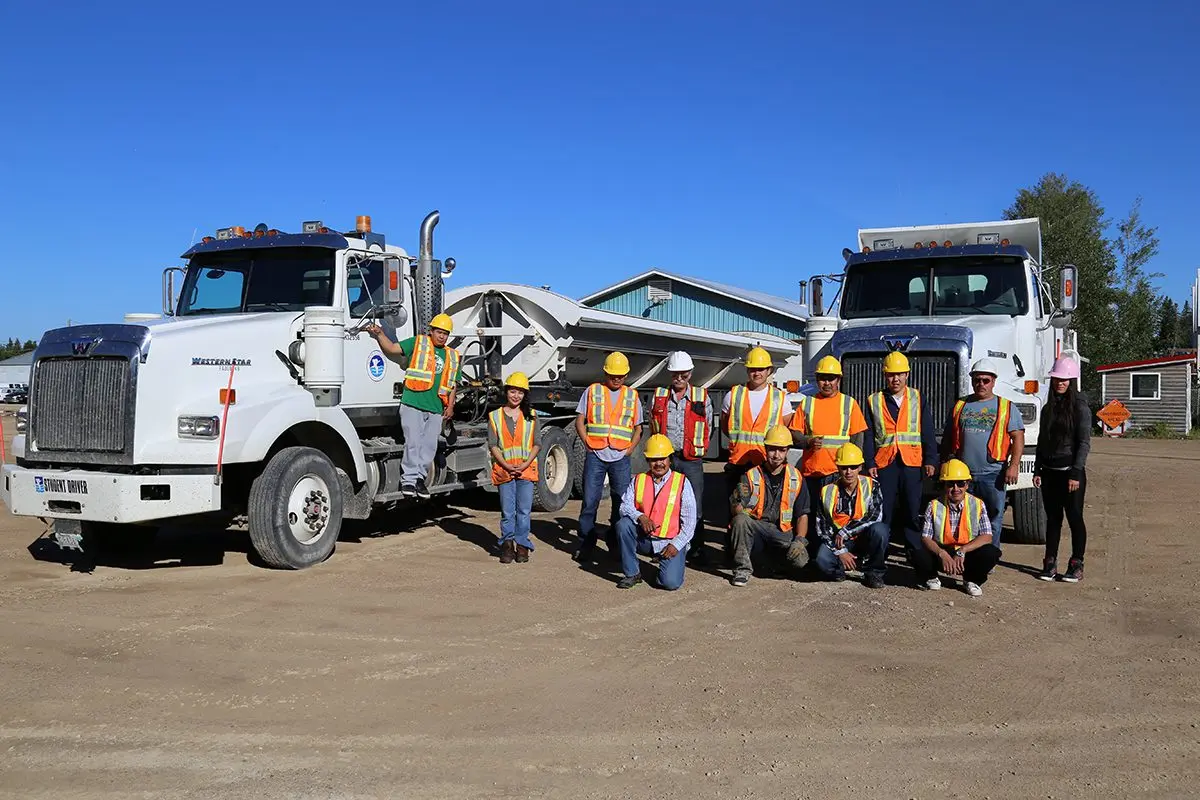
This course is designed to prepare individuals to write and pass the written and practical GNWT DMV Class 3 driver’s exam and practical test. Work experience is based on the skills required of a driver employed at mine sites, construction sites, hamlets, towns, and cities.

Class 3 Driver Training is 150 hours in length.

The eligibility requirements for Class 1 and Class 3 Driver Training are the same as for the Heavy Equipment Operator programs. Applicants may be admitted based one of the following pathways: academic pathway or experiential/mature student pathway.

Academic Pathway:

Applicants may be considered for admission who:

  • Are 18 years of age or older; and
  • Have been enrolled in English 10-2

Applicants who have completed the Aurora College Occupations and College Access Program (OCAP) and have successfully completed:

  • Aurora College English 130
  • Equivalencies and other post-secondary education may be considered.

Mature Student/Experiential Pathway

Applicants who are 20 years or older, have been out of school for at least one year, and have relevant work/life experience in the heavy equipment operator field may be considered for admission. Eligibility for the program may be determined through an interview, an assessment of reading comprehension, a review of the applicant’s resume, or other means.

Regardless of the pathway for admission, all applicants must:

  • Submit official transcripts from high school and/or post-secondary education, as applicable;
  • Possess a valid Class 5 Driver’s Licence prior to entry into the program. A probationary Class 5 Driver’s Licence is not acceptable. A restricted licence may limit the applicant’s training equipment and licensing potential; and
  • Submit a current driver’s licence abstract (can be obtained from the GNWT Department of Transportation and Vehicle Licensing Office).

Depending on the applicant’s pathway, they may be requested to:

  • Submit a resume or other evidence of relevant work/life experience.
  • Participate in an interview.
  • Complete an assessment of reading comprehension.

Based on screening in the above areas, applicants may be advised that they are “conditionally accepted”. If applicants are “conditionally accepted” into the program, they may also be required to submit proof that they have passed a Class 3 or Class 1 GNWT Driver’s Medical Exam.

NOTE: Applicants are not required to obtain a medical for their initial application. After screening, applicants who will be training on Class 1 or Class 3 equipment will be advised to pass a Class 1 or Class 3 Driver’s Medical in order to become fully accepted in the program

Applicants must complete an Aurora College application form, provide high school and/or other official post-secondary transcripts, and a current driver’s abstract. Applicants are encouraged to apply early. Applicants who have been waitlisted for the next intake and who do not get admission, may be offered a seat in the next intake of the program.

Applicants who are currently enrolled in one or more of the required academic courses for admission are encouraged to apply early and provide transcripts that demonstrate that they are currently registered in these courses. Applicants may receive a conditional acceptance that is dependent on their successful completion of the required courses (65 percent or higher). Applicants who are conditionally accepted will be required to provide a final transcript upon completion of the required courses to be fully accepted.

Applicants will be admitted to this program based on how well they meet the program eligibility requirements, on the date of application, eligibility requirements/pathways and on space availability.

Priority may be given to applicants who have resided in the Northwest Territories for at least one year prior to the date of the program. Additionally, applicants who are currently enrolled in the Aurora College Occupations and College Access Program (OCAP) are encouraged to apply early and prior to completion of their program. To be given priority in the selection process, applicants must have submitted a complete* application. Applications will be processed based on the date that their application is complete*.

* A complete application is one in which all required documentation (e.g. application, transcripts, letter of reference) and all requested documentation (e.g. additional documentation that supports your eligibility that is requested for your application is received).

Students must bring clothing suitable for outside equipment operation. Students must also possess and wear proper protective footwear, CSA-approved Class 2 coveralls, or coveralls. Headgear, safety vest, and safety glasses are available for purchase by the College. All required manuals for the course are provided by the College. Attendance for all modules is compulsory.

Punctuality and attendance are an important component in completing this course. Unexcused absences will result in dismissal from the course.

Upon successful completion of the course, the student will be able to:

  1. Operate the equipment at a basic entry level for employment.
  2. Understand how to competently and safely operate the equipment the student has trained on.
  3. Understand and perform the required safety checks and maintenance on the equipment.
  4. Perform basic construction procedures associated with the equipment.
  5. Have a basic understanding of the workings of the vehicle’s systems.
  6. Understand and demonstrate the required employment criteria.

Students must successfully complete the compulsory/core and operational modules in their course as well as demonstrate acceptable life skills such as punctuality, attendance and professional attitude. Students must demonstrate, to the satisfaction of their instructors, that they are safety-minded and capable operators.

Record of Participation

Courses in Program

Gain the knowledge and skills required to pass the written and practical GNWT DMV ELT (Entry Level Training) Class 1 driver’s written and practical exams

Schools:

Location:

Program length:

  • 150 hours

Start date:

  • See Program Description for Delivery Schedule

Credential:

  • Aurora College Record of Achievement

Delivery:

  • Classroom
  • Field-based Training
Contact Aurora College for more information

This course is designed to prepare individuals to write and pass the written and practical GNWT DMV ELT (Entry Level Training) Class 1 driver’s exam and practical test. The training concentrates on the operation of a tractor tri-axle side dump trailer in a construction and/or industrial environment. Students will be exposed to various operations in a construction/industrial setting in conjunction with other heavy equipment. The course focuses on safety, maintenance, and the operation of a tractor truck with tri-axle side dump equipment. This includes road safety, pre-trip planning, loading, hauling and dumping, trip planning, and effective and efficient road travel.

Class 1 Driver Training is 150 hours in length.

2025-2026 Delivery Schedule:
August 18 – September 19, 2025
October 27 – November 28, 2025
January 12 – February 13, 2026
February 23 – March 27, 2026
April 6 – May 8, 2026
May 18 – June 19, 2026

The eligibility requirements for Class 1 and Class 3 Driver Training are the same as for the Heavy Equipment Operator programs. Applicants may be admitted based one of the following pathways: academic pathway or experiential/mature student pathway.

Academic Pathway:

Applicants may be considered for admission who:

  • Are 18 years of age or older; and
  • Have been enrolled in English 10-2

Applicants who have completed the Aurora College Occupations and College Access Program (OCAP) and have successfully completed:

  • Aurora College English 130
  • Equivalencies and other post-secondary education may be considered.

Mature Student/Experiential Pathway

Applicants who are 20 years or older, have been out of school for at least one year, and have relevant work/life experience in the heavy equipment operator field may be considered for admission. Eligibility for the program may be determined through an interview, an assessment of reading comprehension, a review of the applicant’s resume, or other means.

Regardless of the pathway for admission, all applicants must:

  • Submit official transcripts from high school and/or post-secondary education, as applicable;
  • Possess a valid Class 5 Driver’s Licence prior to entry into the program. A probationary Class 5 Driver’s Licence is not acceptable. A restricted licence may limit the applicant’s training equipment and licensing potential; and
  • Submit a current driver’s licence abstract (can be obtained from the GNWT Department of Transportation and Vehicle Licensing Office).

Depending on the applicant’s pathway, they may be requested to:

  • Submit a resume or other evidence of relevant work/life experience.
  • Participate in an interview.
  • Complete an assessment of reading comprehension.

Based on screening in the above areas, applicants may be advised that they are “conditionally accepted”. If applicants are “conditionally accepted” into the program, they may also be required to submit proof that they have passed a Class 3 or Class 1 GNWT Driver’s Medical Exam.

NOTE: Applicants are not required to obtain a medical for their initial application. After screening, applicants who will be training on Class 1 or Class 3 equipment will be advised to pass a Class 1 or Class 3 Driver’s Medical in order to become fully accepted in the program

Applicants must complete an Aurora College application form, provide high school and/or other official post-secondary transcripts, and a current driver’s abstract. Applicants are encouraged to apply early. Applicants who have been waitlisted for the next intake and who do not get admission, may be offered a seat in the next intake of the program.

Applicants who are currently enrolled in one or more of the required academic courses for admission are encouraged to apply early and provide transcripts that demonstrate that they are currently registered in these courses. Applicants may receive a conditional acceptance that is dependent on their successful completion of the required courses (65 percent or higher). Applicants who are conditionally accepted will be required to provide a final transcript upon completion of the required courses to be fully accepted.

Applicants will be admitted to this program based on how well they meet the program eligibility requirements, on the date of application, eligibility requirements/pathways and on space availability.

Priority may be given to applicants who have resided in the Northwest Territories for at least one year prior to the date of the program. Additionally, applicants who are currently enrolled in the Aurora College Occupations and College Access Program (OCAP) are encouraged to apply early and prior to completion of their program. To be given priority in the selection process, applicants must have submitted a complete* application. Applications will be processed based on the date that their application is complete*.

* A complete application is one in which all required documentation (e.g. application, transcripts, letter of reference) and all requested documentation (e.g. additional documentation that supports your eligibility that is requested for your application is received).

Students must bring clothing suitable for outside equipment operation. Students must also possess and wear proper protective footwear, CSA-approved Class 2 coveralls, or coveralls. Headgear, safety vest, and safety glasses are available for purchase by the College. All required manuals for the course are provided by the College. Attendance for all modules is compulsory.

Punctuality and attendance are an important component in completing this course. Unexcused absences will result in dismissal from the course.

Upon successful completion of the course, the student will be able to:

  1. Operate the equipment at a basic entry level for employment.
  2. Understand how to competently and safely operate the equipment the student has trained on.
  3. Understand and perform the required safety checks and maintenance on the equipment.
  4. Perform basic construction procedures associated with the equipment.
  5. Have a basic understanding of the workings of the vehicle’s systems.
  6. Understand and demonstrate the required employment criteria.

Students must successfully complete the compulsory/core and operational modules in their course as well as demonstrate acceptable life skills such as punctuality, attendance and professional attitude. Students must demonstrate, to the satisfaction of their instructors, that they are safety-minded and capable operators.

Record of Participation

Courses in Program

Training for experienced Northern Leaders

School:

Location:

Program length:

  • Nine modules, Fall – June

Start date:

  • Fall

Credential:

  • Aurora College Record of Achievement

Delivery:

  • Part Time
  • Online
  • Classroom
Contact Aurora College for more information

*Note: NLDP is a part-time program delivered in nine modules during the academic year

The Northern Leadership Development Program (NLDP) Level 2 is designed specifically for experienced leaders in their respective industries. This program aims to further enhance the leadership abilities of participants who are currently in leadership positions, equipping them with the necessary skills to be more present and effective leaders in their organizations.

Building upon the foundational knowledge gained in NLDP Level 1, this advanced program consists of nine comprehensive modules, with a strong emphasis on emotional intelligence throughout the program. Emotional intelligence is a critical trait for leaders, as it enables them to understand and manage their own emotions, as well as effectively navigate and influence the emotions of others. By focusing on emotional intelligence, participants will develop the skills necessary to inspire and lead their teams with empathy, authenticity, and resilience.

To ensure a smooth transition for participants who did not attend NLDP Level 1, an orientation session will be held prior to the start of Level 2. This session will introduce them to the tools, theories, and concepts that will be built upon in this advanced program, enabling them to fully engage and benefit from the Level 2 curriculum.

The program will primarily be offered online, utilizing a variety of teaching and learning practices to maximize accessibility and accommodate participants’ busy schedules. However, the first and final modules will be conducted in person, providing an opportunity for participants to connect face-to-face and foster a sense of camaraderie. These in-person sessions will be held in Yellowknife, Northwest Territories.

The NLDP is unique in that each student will select a leadership mentor to support their growth and application of what they are learning as they progress through the program. This mentor support is an important element that maximizes each student’s leadership growth and development throughout the program.

With a focus on applied learning, participants are encouraged to apply their newly acquired knowledge and skills between modules. This approach necessitates a high level of personal and professional accountability, as participants actively seek opportunities to practice leadership in their day-to-day roles.

This program offers a variety of supported learning approaches including whole group classroom sessions, personalized coaching, group workshops and applied learning assignments that are unique to each participant. Through structured classroom sessions, participants gain a comprehensive understanding of leadership principles and frameworks. Individual coaching provides personalized guidance, enabling participants to delve deeper into their unique leadership challenges and growth areas. Group workshops facilitate collaborative learning and the exchange of insights and best practices among peers. Finally, experiential learning activities allow participants to put theory into practice, immersing themselves in real-world scenarios to hone their leadership abilities.

Throughout the program, participants develop a well-rounded skill set that equips them to navigate complex leadership situations effectively. They learn to communicate with impact, harness emotional intelligence to build strong relationships, make informed decisions, manage conflicts constructively, lead and manage simultaneously, and foster high-performing teams.

By actively participating in the Northern Leadership Development Program Level 2, leaders gain the necessary tools and experiences to excel in their roles, driving personal and organizational success. Through their commitment to leadership in action, they become catalysts for positive change within their organizations, inspiring their teams and achieving exceptional results.

Applicants must be identified by their employer as strong candidates to participate fully in the program and integrate their learning into their respective workplaces.

Completion of NLDP Level 1 is preferred. Otherwise, some formal leadership experience, training or corresponding certificate is required, and eligibility is determined on a case-by-case basis.  In lieu of formal leadership training, a description of their leadership journey is requested to help determine the appropriate level of learning.

For those students who have not completed NLDP Level 1, they will attend a mandatory two-day pre-entry workshop delivered before Module 1 start.

The student must have a designated mentor that is aligned with their developmental goals and can commit to this vital role for the duration of the program, which averages about one to two hours each month with the exception of the first month and the final month of the program where the mentors are invited to attend an online orientation session and parts of the final, ninth module.

Applicants will be accepted based on the program eligibility criteria and on the recommendation and support of their employer.

Applicants will be admitted based on the program eligibility criteria, subject to space availability.

The NLDP courses will be delivered over an academic year. Students will earn a Record of Achievement after successfully completing all of the required modules. Further information about the courses is available in the NLDP Student Guide which will be provided to the students.

Students must attend all online and face-to-face activities scheduled for the program onsite in the Yellowknife area. Each program course will require attendance on two days for Modules 1 – 8 and four days for Module 9. In consideration of the work schedules of the students, the course dates and start and finish times will be scheduled to align with industry-imposed travel arrangements, where possible, and will be shared as part of the program delivery schedule.

Mentors are requested to attend a one day Mentoring Workshop, and part of a second day on the second module of the program, as well as the ninth module, Leadership in Action.

NLDP Level 2 focuses on enhancing the leadership skills and capabilities of students who already have some foundational knowledge and experience in leadership roles. The program aims to further develop their leadership competencies and prepare them for more advanced leadership responsibilities. The content is based on materials from NLDP Level 1.

Here are the overall program objectives:

  1. Enhancing self-awareness: Develop a deeper understanding of their strengths, challenges, values, and leadership style. Encourage reflection and self-assessment to identify areas for personal growth.
  2. Developing interpersonal skills: Enhance students’ ability to communicate effectively, build relationships, and collaborate with others. Emphasize active listening, empathy, and conflict management skills.
  3. Strengthening strategic thinking: Enable students to think strategically and make informed decisions. Develop their ability to analyze complex situations, anticipate challenges, and identify opportunities.
  4. Cultivating resilience and adaptability: Prepare leaders to navigate change, uncertainty, and ambiguity. Provide tools and strategies to manage stress, handle setbacks, and embrace continuous learning.
  5. Building team leadership capabilities: Develop students’ skills in leading and managing teams. Focus on team dynamics, fostering a positive team culture, and empowering team members to achieve goals.
  6. Promoting diversity and inclusion: Foster an understanding of the importance of diversity and inclusion in leadership. Enhance students’ ability to lead diverse teams and create an inclusive work environment.
  7. Enhancing decision-making skills: Strengthen students’ ability to make effective decisions based on data, critical thinking, and ethical considerations. Introduce frameworks for decision-making and problem-solving.
  8. Developing leadership presence: Enhance students’ executive presence and influence. Focus on public speaking, presentation skills, and communication.
  9. Promoting innovation and creativity: Foster an environment that encourages innovation and creative thinking. Develop students’ ability to generate and implement new ideas.
  10. Encouraging continuous improvement: Instill a mindset of continuous learning and personal growth. Encourage students to seek feedback, engage in self-reflection, and set development goals.

The NLDP Level 2 delivery focuses on applied leadership principles and skills for NLDP graduates or current northern leaders who have other leadership training and/or leadership experience. It follows the topic areas of Level 1, Modules one to nine, taking the content to a deeper level with specific focus on leadership in action.

It includes the following:

  • Pre-entry workshop for those who have not completed the NLDP Level 1
  • Administration of EQi 2.0 360-degree feedback assessment and the Myers-Briggs Type Indicator (if not already completed)
  • Review of key leadership models, principles, skills, and tools related to each module content area based on NLDP Level 1 content
  • One-on-one coaching at the beginning, middle, and end of the program delivery.
  • Mentor chosen by the participant and employer to support the process throughout. In addition, the mentor participates in the 2nd module and the 9th module
  • Commitment to applied learning goals, reflections, and content review in between each module.
  • Post-administration of EQ 360 assessment.
  • In-person delivery for the first module (Personal Development), and the ninth module (Leadership in Action). All other modules would be virtual. The last module would join with the concurrent NLDP Level 1 cohort.

Using the overall program objectives and the models, tools, and theories from NLDP Level 1, the learning outcomes for each module include:

  1. Application:
    • Apply leadership theories to analyze and evaluate leadership effectiveness in case studies
    • Demonstrate effective communication skills in a leadership context.
    • Develop strategies for motivating and inspiring team members.
    • Utilize problem-solving techniques to address leadership challenges.
  2. Analysis:
    • Analyze different leadership approaches and their suitability for various organizational contexts.
    • Evaluate the strengths and challenges of different leadership approaches.
    • Assess the impact of leadership on team dynamics and performance.
    • Identify potential barriers to effective leadership and propose solutions.
  3. Synthesis:
    • Determine how their personal leadership philosophy/purpose statement based on acquired knowledge and insights applies to the leadership concepts and theories.
    • Design a leadership development plan for oneself.
    • Generate innovative leadership strategies to address complex organizational issues.
    • Combine leadership theories and practical experience to make informed leadership decisions.
  4. Evaluation:
    • Critique the effectiveness of different leadership practices and suggest improvements.
    • Assess the ethical implications of leadership decisions.
    • Evaluate personal leadership development progress and identify areas for further growth.
    • Judge the impact of personal leadership development on individual and organizational outcomes.

courses /modules. To successfully complete a course, a student must attend at least 60 percent of the course hours and participate in the prescribed activities as directed by the facilitator. A student who does not attend 60 percent of the course hours for a course, or who does not participate as directed by the facilitator, will fail the course.

The Mentoring Workshop course is to be taken by the mentors of the students, not the students.

Record of Achievement

Complete two years of General Studies before applying to directly enter year three of a Bachelor of Education or Social Work.

School:

Locations:

Program length:

  • 60 credits (Two Years)

Start date:

  • September

Credential:

  • Diploma

Delivery:

  • Online
  • Classroom
Apply Online

The General Studies program provides students with a broad liberal arts and sciences education with a focus on northern, Indigenous content. Students in General Studies are encouraged to embrace academic breadth in both knowledge and skills, develop the habit of analytical and critical thought, and recognize and respect multiple ways of knowing.

The program offers a variety of courses from which students choose their own path, including continuing into a university degree or related program, such as the Bachelor of Social Work and Bachelor of Education degrees at Aurora College. Students may also be able to take electives in other Aurora College post-secondary programs such as Business Administration, Environment and Natural Resources Technology, Nursing, etc.

Students in the General Studies program earn up to 60 credits in two academic years: 3 credits per course, five courses per semester, Fall semester and Winter semester. Students who take fewer courses each semester will take more time to complete 60 credits.

Applicants may be admitted into the General Studies program based on one of the following pathways: academic and mature student/experiential.

Academic Pathway

Applicants may be considered for admission who have a minimum final grade of 65 percent in the following:

  • English 30-2 (or higher); AND
  • One of the following: Math 30-2 (or higher), Science 30, Biology 30, Chemistry 30, or Physics 30; AND
  • One of the following: Social Studies 20-2 (or higher) OR Northern Studies 30.

Applicants who have completed the Aurora College University and College Access Program (UCAP) may also be considered for admission if they have a minimum final grade of 65 percent in the following:

  • English 150 (or higher); AND
  • One of the following: Math 150 (or higher), Science 30, Biology 30, Chemistry 30, or Physics 30; AND
  • Social Studies 20-2 (or higher)

Equivalencies and other post-secondary education may be considered.

Applicants who do not meet admission requirements may be considered for Acceptance on Probation, which may require taking one or more upgrading courses during their first year, if they:

  • Meet the English requirement; AND
  • Meet either the Math/Science OR Social Science requirement; BUT
  • Do NOT meet the other requirement, however have a minimum 65 percent final grade at the Grade 11 level.

Mature Student/Experiential Pathway

Applicants who are 20 years or older, have been out of school for at least one year, and have relevant work/life experience may be considered for admission on an individual basis. Eligibility for the program may be determined through an interview and a placement test or other assessment of English and/or Math. The applicant may be required to submit a resume or other evidence of relevant work/life experience. Applicants may be required to meet some prerequisite or upgrading courses as part of their program or to take some courses.

Regardless of the pathway for admission, all applicants must:

  • Submit official transcripts from high school and post-secondary education, as applicable.

Depending on the applicant’s pathway, they may be advised/requested to submit:

  • A resume or other evidence of relevant work/life experience.

application form and submit official transcripts (high school and post-secondary). Applicants are encouraged to apply early and submit all required and requested documentation.

Applicants who are enrolled in one or more of the required academic courses for admission are encouraged to apply early and provide transcripts that demonstrate that they are currently registered in these courses. Applicants may be accepted on probation, which is dependent on their successful completion of the required courses (65% or higher). Applicants who are accepted on probation will be required to provide a final transcript upon completion of the required courses to be fully accepted.

Students who have already completed post-secondary course work may have transferability into this program. Post-secondary transcripts and course syllabi/outlines will be required for evaluation. Students seeking transfer credit will be required to follow process defined in Aurora College Policy C.01 Transfer Credit.

Applicants will be admitted into the program based on how well they meet the program eligibility requirements and on space availability. Indigenous persons, long-term residents of the NWT, and graduates of the University and College Access Program (UCAP) at Aurora College will be given priority in the selection process if they have submitted a complete application on or before November 30. Priority consideration for admission will not be considered for applications received on or after December 1. Applications will be processed first come, first served based on the date that the complete application** is submitted.

Some courses may have prerequisites that are different from the program admission requirements. Admission to the program does not guarantee permission to take every course. Students may need prerequisite courses, including upgrading courses, to satisfy course requirements. Prerequisite upgrading courses may not be used for credit towards the General Studies diploma.

*Preference will be given to longer-term northern residents from the Northwest Territories, the Yukon, and Nunavut before short-term residents of one year or less.

**A complete application is one that contains all required documentation (e.g. application, transcripts, etc.) and all requested documentation (e.g. additional documentation that supports your eligibility that is requested for your application).

Students in General Studies must earn 60 credits, including successfully completing the three required courses, to be eligible to complete General Studies. Students interested in applying to the Bachelor of Social Work and/or Bachelor of Education programs must successfully complete required courses for the respective program, in addition to the three required General Studies courses.

General Studies is not intended for students who will be primarily upgrading (eg. students who need to upgrade three or more courses), though applicants may include a limited number of upgrading courses in their course selection in their first year of General Studies.

Provide students with a broad liberal arts and sciences education with a focus on northern, Indigenous content.

  • Provide students with a sound educational foundation so they can continue their education beyond General Studies, including into the Aurora College Bachelor of Social Work or Bachelor of Education or other post-secondary programs.
  • Encourage students to engage in critical inquiry and self-reflection to facilitate life-long learning.

  1. The passing mark for each course will be 50 percent. However, students must maintain a cumulative average of 65 percent in the General Studies program.
  2. To complete General Studies, students must do each of the following:
    • Maintain a cumulative average of at least 65 percent in the program.
    • Earn 60 credits from courses in the program.
    • Successfully complete the three General Studies required courses.
    • Complete all requirements within five years of commencing studies.
  3. Prerequisite and upgrading courses may NOT satisfy course or credit requirements for program completion.

Aurora College General Studies Diploma

Course for LPNs to bridge into BSN Program

School:

Program length:

  • 45 Hours

Start date:

  • January 2028 - Applications Open November 2027

Delivery:

  • Online
Apply Online

This program offers a bridge course for LPNs. This course is offered by distance. Upon successful completion, LPNs can enter into Year 2 of the BSN program. The BSN program is offered face-to-face.

Applicants must submit:

  • Aurora College application;
  • Proof of a Canadian Practical Nurse license;
  • Practical Nurse Program transcripts that indicate achievement of diploma;
  • Work or school-related reference; and
  • Resume that indicates a minimum of one year experience as a LPN.

Aurora College recognizes prior learning which has taken place in formal learning experiences or through employment. Licensed Practical Nurses who are interested in exploring prior learning should speak to the Senior Instructor regarding recognition of prior learning.

Applicants must submit:

  • Aurora College application;
  • Proof of a Canadian Practical Nurse license;
  • Practical Nurse Program transcripts that indicate achievement of diploma;
  • Work or school-related reference; and
  • Resume that indicates a minimum of one year experience as a LPN.

Aurora College recognizes prior learning which has taken place in formal learning experiences or through employment. Licensed Practical Nurses who are interested in exploring prior learning should speak to the Senior Instructor regarding recognition of prior learning.

  • LPNs will be considered for admission every year
  • See BSN program for further details.

Preference will be given to longer-term northern residents from Northwest Territories, Yukon and Nunavut before short-term residents of one year or less.

  • Complete the LPN Bridge-In Course NURS 0255 with a final grade of 65 percent
  • LPN – Bridge-In students enter Year 2 of the BSN Program

LPN Bridge-In Course NURS 0255:

  • Introduces the philosophy and curriculum concepts of the Bachelor of Science in Nursing (BSN) program
  • Introduces the registered nursing profession
  • Prepares transition from LPN to BSN

See BSN program for courses and requirements for years 2, 3 and 4.

See BSN program for further details.

See BSN program for further details.

Preference will be given to longer-term northern residents from Northwest Territories, Yukon and Nunavut before short-term residents of one year or less.

Observer Communicators help keep the world moving

Schools:

Location:

Program length:

  • 9 Weeks

Start date:

  • Various intakes throughout year

Credential:

  • Aurora College Certificate of Achievement

Delivery:

  • Classroom
  • Simulations
Contact Aurora College for more information

This program is owned and developed by NAV Canada, operator of the Canada’s Air Navigation System. It is delivered by Aurora College.

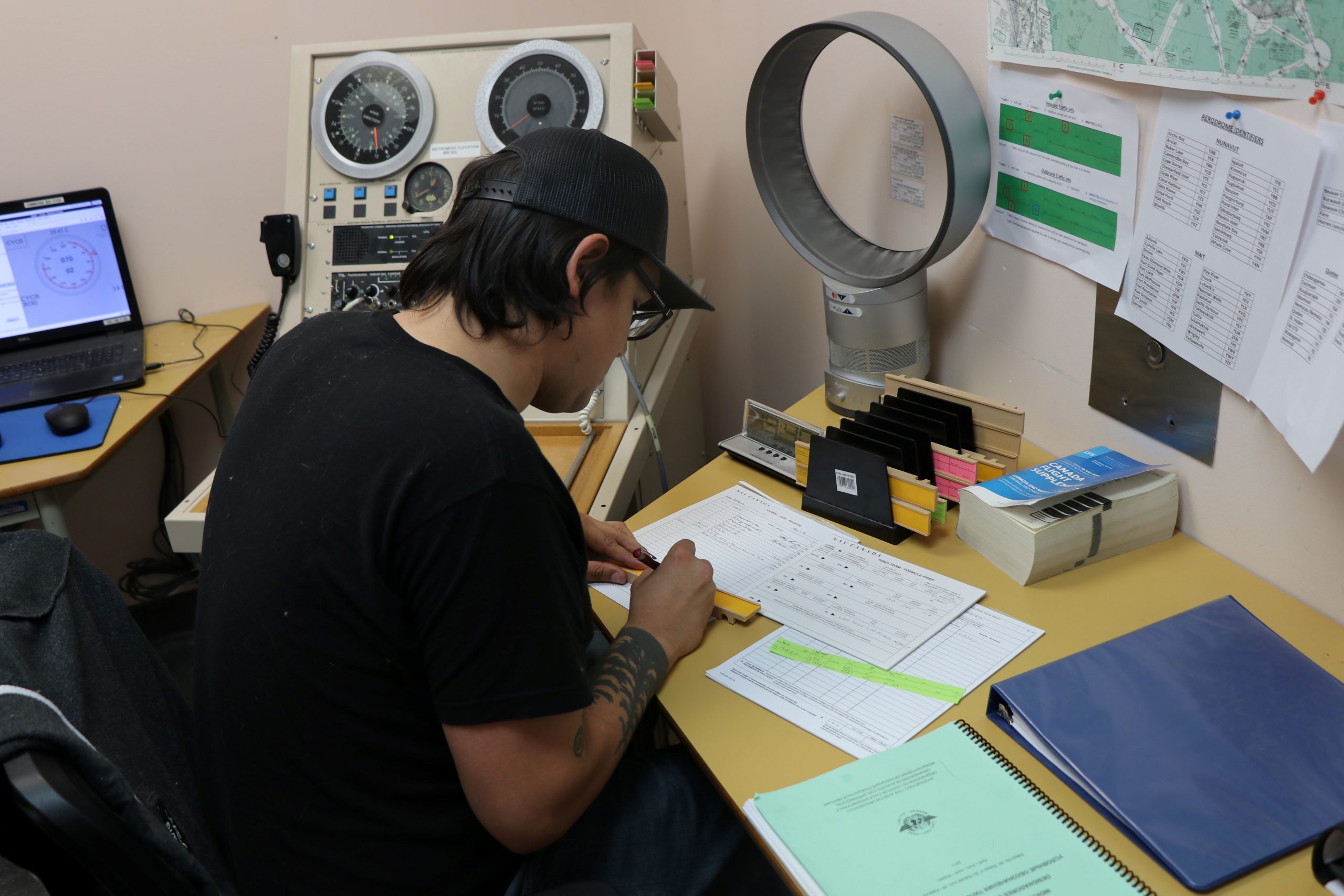
The purpose of this program is to provide training relevant to the skills required to perform the duties of an Observer/Communicator. Training in the core program concentrates on radio simulations, radio communications and operating procedures, and weather observing and recording. Attendance is required at all scheduled classes. Students should be aware that homework will be assigned on a regular basis.

There are three required courses for program. Depending on operational requirements, students may be required to take an additional course.

Math 10-3 and Grade 10 English, or ALBE Math 140 and ALBE English 140 are admission requirements. Equivalencies will be considered on an individual basis. Applicants will normally be tested in order to evaluate their basic Math and English comprehension skills.


Applicants are assessed by NAV Canada and applicable sponsoring agencies.

Candidates are recruited from the Northwest Territories, Nunavut, Yukon and Quebec. Candidates are recruited by the applicable program authorities.

The Observer Communicator Program is a 48 in-class day program offered at Thebacha Campus that will prepare the student for On-The-Job certification at a Community Aerodrome Radio Station.

Curriculum requirements are set by NAV CANADA.

Approximately 50% of class time will be spent practicing the skills learned during classroom lectures, simulating the equipment and conditions of working at an airport. Successful completion of the program requires hard work, time management skills, excellent organizational skills, a positive attitude, and the ability to deal with stress. Program requirements include working outside during weather observations.

The objective of the program is to train Observer/Communicators to work at Community Aerodrome Radio Stations. The graduates – as employers of their respective contractor, hamlet, territorial or provincial government – will perform aviation support duties on behalf of their employer.

The Observer/Communicator may be called upon to perform the following:

  1. Emergency Services;
  2. Air and Ground Communication Services;
  3. Weather Observing Services;
  4. Flight Planning Service;
  5. Communications Equipment and Navaids Services;
  6. Aerodrome Status Reporting Service; and,
  7. Administration Service.

Students must pass all three of the required courses in order to successfully complete the program and receive an “Aurora College Record of Achievement” document.

  • The passing grade in course 211-001 is 75%
  • The passing grade in course 211-002 is 75%
  • The passing grade in course 211-003 is 75%

The passing grade in course 211-300 is 75% (If required by operation type, see Program Description/ Courses in Program)

Aurora College Certificate of Achievement

How to apply

Candidates are recruited from the Northwest Territories, Nunavut, Yukon and Quebec by Program Authorities.

For Recruitment information in the NWT and Nunavut,  please contact ATS Services Limited:

For Recruitment information in the Yukon please contact Community Airports Manager

Department of Highways & Public Works | Transportation Aviation Branch | W-14

Box 2129, Haines Junction, YT  Y0B 1L0

P 867-634-2046 | C 867-323-2046 | F 867-667-8446


For Recruitment in Katavik, Quebec please contact Training Coordinator Transport

Kativik Regional Government

P.O Box 149, Kangirsuk, QC, J0M 1A0

P819-935-4822 | F 819-935-4902

Heavy Equipment Operators are in high demand

Schools:

Locations:

Program length:

  • 15 Weeks for full program. For Abridged Program and Introduction Program see Program Descriptions

Start date:

  • August and March

Credential:

  • Aurora College Record of Achievement

Delivery:

  • Classroom
  • Field-based Training
Apply Online

Aurora College offers three programs in the Heavy Equipment Operator field.

Heavy Equipment Operator

In this full 15-week program, students receive compulsory/core training in first aid, introduction to heavy equipment operation, introduction to the knowledge and use of heavy equipment, introduction to equipment systems, preventative maintenance procedures, interpretation of construction surveys, and air brake systems. This program also includes up to 185 hours of training on each of two pieces of heavy equipment (crawler, motor grader, front-end loader, track excavator swing rig, Class 3 tandem axle dump truck). A minimum of 165 hours will be required on each piece of equipment to complete the program.

Abridged Heavy Equipment Operator

This eight-week program offers the same compulsory/core training as the full-length program, but students will receive up to 185 hours of training on one (as opposed to two) piece of heavy equipment. As per the full-length program, a minimum of 165 hours on one piece of equipment will be required to complete the program.
*Usually offered in partnership with a third party. 

Introduction to Heavy Equipment Operator

This nine-week program offers the same compulsory/core training as the full-length program. Students will receive up to 100 hours of training on each of two pieces of equipment. A minimum of 90 hours on each piece of equipment will be required to complete the program.

*Usually offered in partnership with a third party.

The eligibility requirements for all three heavy equipment operator programs are the same. Applicants may be admitted into the Heavy Equipment Operator program based one of the following pathways: academic pathway or experiential/mature student pathway.

Academic Pathway:

Applicants may be considered for admission who:

  • Are 18 years of age or older; and
  • Have been enrolled in English 10-2

Applicants who have completed the Aurora College Occupations and College Access Program (OCAP) and have successfully completed:

  • Aurora College English 130

Equivalencies and other post-secondary education may be considered.

Mature Student/Experiential Pathway

  • Applicants who are 20 years or older, have been out of school for at least one year, and have relevant work/life experience in the heavy equipment operator field may be considered for admission. Eligibility for the program may be determined through an interview, an assessment of reading comprehension, a review of the applicant’s resume, or other means.

Regardless of the pathway for admission, all applicants must:

  • Submit official transcripts from high school and/or post-secondary education, as applicable;
  • Possess a valid Class 5 Driver’s Licence prior to entry into the program. A probationary Class 5 Driver’s Licence is not acceptable. A restricted licence may limit the applicant’s training equipment and licensing potential; and
  • Submit a current driver’s licence abstract (can be obtained from the GNWT Department of Transportation and Vehicle Licensing Office).

Depending on the applicant’s pathway, they may be requested to:

  • Submit a resume or other evidence of relevant work/life experience.
  • Participate in an interview.
  • Complete an assessment of reading comprehension.

Based on screening in the above areas, applicants may be advised that they are “conditionally accepted”. If applicants are “conditionally accepted” into the program, they may also be required to submit proof that they have passed a Class 3 or Class 1 GNWT Driver’s Medical Exam.
NOTE 1. Applicants are not required to obtain a medical for their initial application. After screening, applicants who will be training on Class 1 or Class 3 equipment will be advised to pass a Class 1 or Class 3 Driver’s Medical in order to become fully accepted in the program.
NOTE 2. For entry into the HEO program, either a Class 1 or Class 3 Driver’s Medical is acceptable. The criteria for both medicals are similar, so it may be advantageous for a student to get a Class 1 Driver’s Medical if they anticipate pursuing a Class 1 Licence in the future.

Applicants must complete an Aurora College application form, provide high school and/or other official post-secondary transcripts, and a current driver’s abstract. Applicants are encouraged to apply early. Applicants who have been waitlisted for the next intake and who do not get admission, may be offered a seat in the next intake of the program.

Applicants who are currently enrolled in one or more of the required academic courses for admission are encouraged to apply early and provide transcripts that demonstrate that they are currently registered in these courses. Applicants may receive a conditional acceptance that is dependent on their successful completion of the required courses (65 percent or higher). Applicants who are conditionally accepted will be required to provide a final transcript upon completion of the required courses to be fully accepted.

Applicants will be admitted to this program based on how well they meet the program eligibility requirements, on the date of application, eligibility requirements/pathways and on space availability.

Priority may be given to applicants who have resided in the Northwest Territories for at least one year prior to the date of the program. Additionally, applicants who are currently enrolled in the Aurora College Occupations and College Access Program (OCAP) are encouraged to apply early and prior to completion of their program. To be given priority in the selection process, applicants must have submitted a complete* application. Applications will be processed based on the date that their application is complete*.

Applicants who are accepted to the program after having successfully completed the program in the past so that they can learn to use different equipment will be required to complete all components of the program in their entirety again.

* A complete application is one in which all required documentation (e.g. application, transcripts, letter of reference) and all requested documentation (e.g. additional documentation that supports your eligibility that is requested for your application is received).

Students must bring clothing suitable for outside equipment operation. Students must also possess and wear proper protective footwear, CSA-approved Class 2 coveralls, or coveralls. Headgear, safety vest, and safety glasses are available for purchase by the College. All required manuals for the course are provided by the College. Attendance for all courses is compulsory.

Upon completion of the program, students will be able to:

  • Competently and safely operate specific pieces of equipment at a basic entry-level for employment;
  • Perform required safety checks and maintenance on the equipment;
  • Perform basic construction procedures associated with the equipment;
  • Describe the workings of a vehicle’s systems; and
  • Describe and demonstrate the attributes required by employers of heavy equipment operators.

Students must successfully complete the compulsory/core and operational courses in their respective program as well as demonstrate acceptable life skills such as punctuality, attendance and professional attitude. Students must demonstrate, to the satisfaction of the instructors, that they are safety-minded and capable operators on each of the pieces of equipment they were trained on.
Students must pass all courses in their respective program in order to complete the program.

Heavy Equipment Operator

Aurora College Record of Achievement

Abridged Heavy Equipment Operator

Aurora College Record of Achievement

Introduction to Heavy Equipment Operator

Aurora College Record of Achievement

95% of Aurora College students would recommend their programs to others.

Start your journey to become an electrician

Schools:

Location:

Program length:

  • 20 Weeks

Start date:

  • Level 1: October 19, 2026 - December 11, 2026. January 11, 2027 - April 2, 2027

Credential:

  • Aurora College Fundamentals of Electrical 1 Certificate

Delivery:

  • Classroom
  • Lab
Apply Online

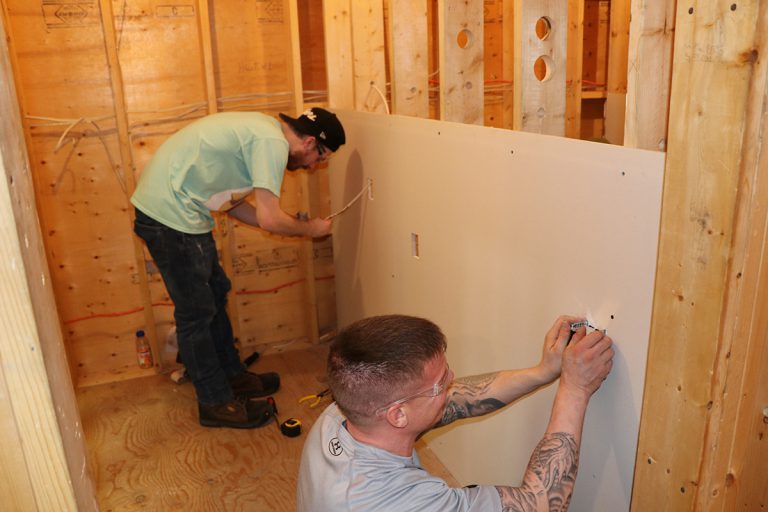
The Fundamentals of Electrical 1 program is 20 weeks in length and is designed to provide participants with the knowledge and skills to pursue entry-level employment and/or an apprenticeship in Electrical. Students participating in the program will gain desirable employment skills that employers seek. The technical aspect of the program is delivered through a combination of classroom theory and hands-on shop work covering all the course material in the first year Apprenticeship Electrician program. In addition, students will also acquire the necessary safety certifications to work in the field.

Applicants may be admitted into the Fundamentals of Electrical program based on one of the following pathways: academic pathway or experiential/mature student pathway.

Academic Pathway

Applicants may be considered for admission who:

  • Are 18 years of age or older;
  • Have successfully completed English 20-2; and
  • Have successfully completed Math 10C; and
  • Have successfully completed Science 10.

Applicants who have completed the Aurora College Occupations and College Access Program (OCAP) Trades Pathway and have:

  • A minimum of 60 percent in Aurora College English 140; and
  • A minimum of 60 percent in Aurora College Math 140; and
  • A minimum of 60 percent in Aurora College Science 140.

Equivalencies and other post-secondary education may be considered.

Mature Student/Experiential Pathway

Applicants who are 20 years or older, have been out of school for at least one year, and have relevant work/life experience in the electrical field may be considered for admission. Eligibility for the program may be determined through an interview, an assessment of English and math, a review of the applicant’s resume, or other means.

Regardless of the pathway for admission, all applicants must:

  • Submit official transcripts from high school and/or post-secondary education, as applicable.

Depending on the applicant’s pathway, they may be requested to:

  • Submit a resume or other evidence of relevant work/life experience.
  • Participate in an interview.
  • Complete an assessment of English and math.

Applicants must complete and Aurora College application form and provide high school and/or other official post-secondary transcripts.

Applicants who are currently enrolled in one or more of the required academic courses for admission are encouraged to apply early and provide transcripts that demonstrate that they are currently registered in these courses. Applicants may receive a conditional acceptance that is dependent on their successful completion of the required courses. Applicants who are conditionally accepted will be required to provide a final transcript upon completion of the required courses to be fully accepted.

Applicants will be admitted to this program based on how well they meet the program eligibility requirements, on the date of application, eligibility requirements/pathways and on space availability. Program applicants must be physically capable of performing the work involved in the Electrical trade. In the selection of students, preference will be given to students with an aptitude and a desire to be employed in the Electrical trade.

Priority may be given to applicants who have resided in the Northwest Territories for at least one year prior to the date of the program. Additionally, applicants who are currently enrolled in the Aurora College Occupations and College Access Program (OCAP) Trades Pathway are encouraged to apply early and prior to completion of their program. To be given priority in the selection process, applicants must have submitted a complete* application. Applications will be processed based on the date that their application is complete*.

* A complete application is one in which all required documentation (e.g. application, transcripts, letter of reference) and all requested documentation (e.g. additional documentation that supports your eligibility that is requested for your application) is received.

The program is designed for people interested in pursuing entry-level employment and/or apprenticeship in the Electrical field. This program will equip students with job readiness skills, theoretical knowledge, technical skills and safety training that potential employers seek giving them an advantage over others without any exposure or experience interested in the trade.

Students are exposed to the program concepts through a combination of in-class instruction, individual/group study and a hands-on shop component covering the practical applications of the trade.

Students who successfully pass this program may be eligible to write the Electrician Level 1 apprenticeship exam. Successful students may be granted up to 480 hours work experience towards their apprenticeship, after becoming indentured, and with their employer’s recommendation.

Upon successful completion of the program, students will:

  1. Develop valuable employment and study skills;
  2. Be prepared for employment in the workplace;
  3. Interpret the general sections of the electrical code;
  4. Understand and wire basic switching control systems;
  5. Read and interpret drawings and diagrams;
  6. Understand basic electrical theory and circuits;
  7. Work safely in the electrical field;

Students must demonstrate acceptable life skills such as punctuality, attendance, and attitude and successfully complete all portions of the program.

Students must achieve a theory mark of 65 percent or greater in each course, obtain a shop mark of 65 percent or greater and complete all assigned work.

Aurora College Certificate of Completion

Start your journey to become a carpenter

Schools:

Location:

Program length:

  • 20 Weeks

Start date:

  • Level 1: August 3, 2026 - December 18, 2026

Credential:

  • Certificate

Delivery:

  • Classroom
  • Lab
Apply Online

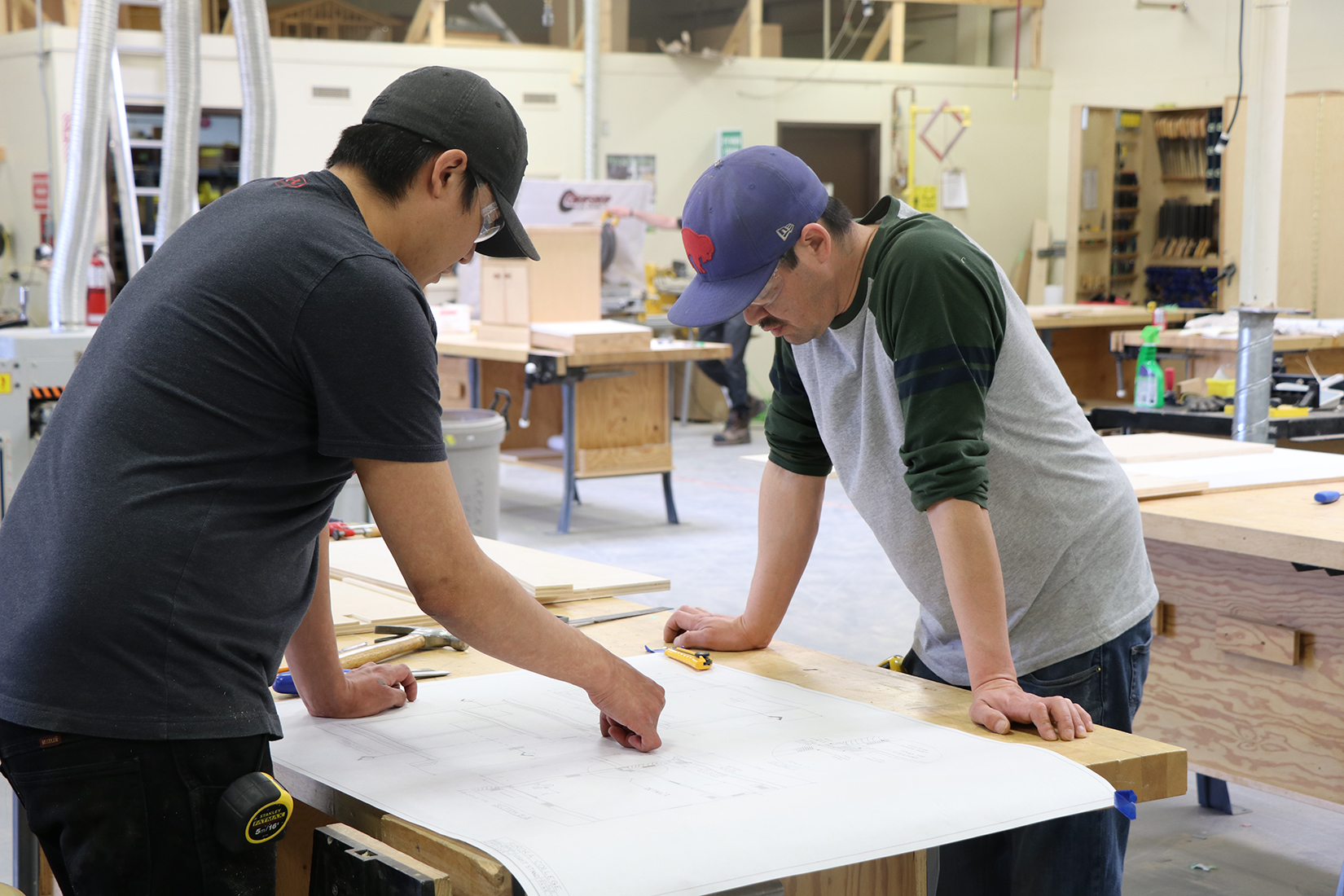
The Fundamentals of Carpentry 1 program is 20 weeks in length and is designed to provide participants with the knowledge and skills to pursue entry-level employment and/or an apprenticeship in Carpentry. Students participating in the program will gain desirable employment skills that employers seek. The technical aspect of the program is delivered through a combination of classroom theory and hands-on shop work covering all the course material in the first year Carpenter Apprentice program. In addition, students will also acquire the necessary safety certifications to work in the field.

Applicants may be admitted into the Fundamentals of Carpentry program based on one of the following pathways: academic pathway or experiential/mature student pathway.

Academic Pathway

Applicants may be considered for admission who:

  • Are 18 years of age or older;
  • Have successfully completed English 10-2; and
  • Have successfully completed Math 10C or have 65 percent or higher in Math 10-3; and
  • Have successfully completed Science 10.

Applicants who have completed the Aurora College Occupations and College Access Program (OCAP) Trades Pathway and have:

  • A minimum of 60 percent in Aurora College English 130; and
  • A minimum of 60 percent in Aurora College Math 140; and
  • A minimum of 60 percent in Aurora College Science 140.

Equivalencies and other post-secondary education may be considered.

Mature Student/Experiential Pathway

Applicants who are 20 years or older, have been out of school for at least one year, and have relevant work/life experience in the carpentry field may be considered for admission. Eligibility for the program may be determined through an interview, an assessment of English and math, a review of the applicant’s resume, or other means.

Regardless of the pathway for admission, all applicants must:

  • Submit official transcripts from high school and/or post-secondary education, as applicable.

Depending on the applicant’s pathway, they may be requested to:

  • Submit a resume or other evidence of relevant work/life experience.
  • Participate in an interview.
  • Complete an assessment of English and math.

Applicants must complete and Aurora College application form and provide high school and/or other official post-secondary transcripts. Applicants are encouraged to apply early. Applicants who are currently enrolled in one or more of the required academic courses for admission are encouraged to apply early and provide transcripts that demonstrate that they are currently registered in these courses. Applicants may receive a conditional acceptance that is dependent on their successful completion of the required courses.

Applicants who are conditionally accepted will be required to provide a final transcript upon completion of the required courses to be fully accepted.

Applicants will be admitted to this program based on how well they meet the program eligibility requirements, on the date of application, eligibility requirements/pathways and on space availability. Program applicants must be physically capable of performing the work involved in the Carpentry trade. In the selection of students, preference will be given to students with an aptitude and a desire to be employed in the Carpentry trade.

Priority may be given to applicants who have resided in the Northwest Territories for at least one year prior to the date of the program. Additionally, applicants who are currently enrolled in the Aurora College Occupations and College Access Program (OCAP), Trades Pathway are encouraged to apply early and prior to completion of their program. To be given priority in the selection process, applicants must have submitted a complete* application. Applications will be processed based on the date that their application is complete*.

* A complete application is one in which contains all required documentation (e.g. application, transcripts, letter of reference) and all requested documentation (e.g. additional documentation that supports your eligibility that is requested for your application).

The program is designed for people interested in pursuing entry-level employment and/or apprenticeship in the Carpentry field. This program will equip students with job readiness skills, theoretical knowledge, technical skill and safety training that potential employers seek giving them an advantage over others without any exposure or experience interested in the trade.

Students are exposed to the program concepts through a combination of in-class instruction, individual/group study and a hands-on shop component covering the practical applications of the trade.

Students who successfully pass this program will be eligible to write the Apprenticeship Carpenter Level 1 Exam. After becoming a registered NWT apprentice and with their employer’s recommendation, students who pass the Level 1 Theory Exam will receive 480 hours work experience towards their apprenticeship.

Upon successful completion of the program, students will:

  1. Develop valuable employment and study skills;
  2. Be prepared for employment in the workplace;
  3. Describe safe work practices related to jobsite conditions;
  4. Describe various building materials used in the construction industry;
  5. Describe and safely use hand and power tools related to the carpentry trade;
  6. Describe and identify site preparation and building layout;
  7. Describe and construct residential footing forms;
  8. Describe and construct residential foundation forms;
  9. Describe and construct residential floor frame systems.

Students must demonstrate acceptable life skills such as punctuality, attendance, and attitude and successfully complete all portions of the program.

Students must achieve a theory mark of 65 percent or greater in each course, obtain a shop mark of 65 percent or greater and complete all assigned work.

A student who is absent for more than five percent of the total time of the course may be terminated from the training.

Aurora College Certificate of Completion